fish tank water too cloudy

I'm going to assume that you have arrived at this article because for some reason your aquarium has turned cloudy. Please don't worry unduly, cloudy aquarium water is not a sign of impending doom. However, it is a sign that there is a slight water imbalance somewhere in the aquarium and you will need to address the situation straightaway. The most common cause of cloudy aquarium water is dust and debris contained in sand or gravel. Normally called substrates, sand and gravel are prewashed before being bagged up for sale. However, it's completely impossible to remove 100% of dirt from substrate so it's inevitable that it's going to get into your aquarium. As soon as this dust is mixed with the water everything turns cloudy and looks absolutely horrible. It's always advisable to wash your substrate before putting it into your new aquarium. Washing substrate is easy, fill a bucket half full and if you can, use a hosepipe to swirl the water around until it runs clear. You will find that with all the will in the world you'll never remove all of the dirt and it's inevitable that the water will be a little bit cloudy.

However, it should only take a couple of days before the dirt settles and the water looks nice and clear. You can buy chemicals from the fish store that bind tiny particles together that are then removed by the filter. Bacterial blooms are often the cause of cloudy water in aquariums that are in the process of cycling. It's quite easy to identify a bacterial bloom because the water will turn to a milky haze in colour. It's very common to encounter a bacterial bloom when setting up a new aquarium. In the early stages of a tank cycle, there may not be enough bacteria in the filter to consume the amount of ammonia being produced by your fish. Bacteria will then build up in the main tank in order to consume the ammonia. It's the free swimming bacteria that make the water look milky. Please don't panic if this happens to you, no harm will come to your fish because the bacteria are there for a very good reason, it just looks very unsightly and unsettling. If you are in the process of cycling your aquarium and the water is cloudy then don't panic, eventually, the water will become perfectly clear.
Keeping fish can be a very addictive hobby and it's so easy for people to put too many fish in their aquarium. People often make the mistake of thinking that just because they've got a large tank they can put as many fish as possible in it.
fish tank light got wetUnfortunately, it doesn't quite work like that.
fish tank lights 3ftEvery fish, big or small needs a certain amount of water, just like we need clean and unpolluted air in order to breathe properly.
fish tank stand biorbWhat happens when you have too many fish is you are not able to maintain good quality water and therefore the fish will always be swimming around in the polluted water.
cheapest aquarium fish in india
If you've recently added some fish and your water has turned cloudy, take a good luck and ask yourself if maybe you have added one too many fish. It's important that every fish keeper understands that filters must be kept running 24/7 without exception.
giant fish tank berlinThe bacteria that live inside your filters require oxygen to survive.
fish tank water surfaceThey get this oxygen from the running water in the filter. When you switch your filters off all the water stops running and the bacteria will slowly die. Once bacteria are dead they will cause a horrible smell and cause the aquarium to go very cloudy. Thankfully the die off is not instantaneous so you do you have time to clean your tanks and filters for all the bacteria dies. Filters shouldn't be switched off for more than about half an hour.

If you do make the mistake of leaving your filters off for too long, or you suffer from a power cut then, unfortunately, you will have to cycle your tank all over again. Some medications can damage the bacterial colony, methylene blue being a good example. Always check the instructions before using a medication in your aquarium. Chlorine will kill bacteria so always use a water conditioner when changing water. Always use existing tank water to rinse out and wash filter media, never rinse media out under your tap. Once your tank is cycled you will be required to change the water at least once a week in order to keep nitrate levels low. It's important not to change too much water in one go. Changing very large amounts of water can often cause a mini cycle which in turn can cause cloudy water. If your aquarium and filtration match the amount of fish you are keeping then you shouldn't really need to change any more than 40% of the water each week. If your aquarium is newly set up then add fish slowly after the water tests show that the tank is cycled.

Many people make the mistake of adding too many fish all at once. Newly established filtration systems can be quite delicate and the bacteria colony will need to catch up with the ammonia being produced when you add more fish. The same applies to established aquariums as well. If you add too many fish at once then you may notice spikes in ammonia levels. This is often completely harmless to fish as the ammonia spike will only last a day or so until the bacteria catches up and water conditions stabilise. Excessive amounts of algae will make your water turn green and cloudy. Algae is relatively easy to keep under control if you follow a few simple rules.The issue of cloudy water can be a baffling phenomenon for many aquarium owners. Unfortunately, there is no single answer as to why your aquarium water is cloudy because there is no single cause. However, based on the color and circumstances under which cloudy water appears, it usually can be pinpointed to a couple of basic causes.
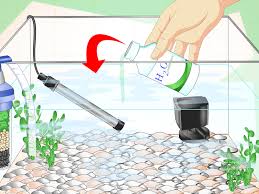
White or Grayish Water Gravel Residue: If the water is cloudy immediately or within an hour or two of filling the tank, it's probably due to insufficiently washed gravel. Drain the tank and rinse the gravel until the water runs clear. That should resolve the problem. Dissolved Constituents: If washing the gravel doesn't solve the problem, the next most likely cause of cloudy water in a newly filled tank is a high level of dissolved constituents, such as phosphates, silicates, or heavy metals. If you test the water, you'll likely find that the pH is high (alkaline). In these cases, treating the water with conditioners will often resolve the problem.Another option, that has many benefits beyond resolving cloudy water, is to use RO (Reverse Osmosis) water. Your local fish shop may sell it or sell units capable of making RO water. Bacterial Blossom - Often, cloudy water doesn't appear the instant an aquarium is set up. Instead, it appears days, weeks, or even months later. The cause is usually due to bacterial bloom.
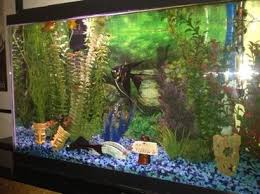
As the new aquarium goes through the initial break-in cycle, it is not unusual for the water to become cloudy or at least a little hazy. It will take several weeks to several months to establish bacterial colonies that are able to clear waste from the water. Over time, that cloudiness will resolve itself.Decaying plants or excess food that remains uneaten can also cause the milky water seen in bacterial bloom. Regardless of the cause, don't panic over bacterial blooms. Keeping the aquarium very clean by removing debris such as decaying plants and uneaten food, vacuuming the gravel regularly, and performing partial water changes will quickly resolve most cases of bacterial bloom. Cut back feeding to every second or third day, which will reduce excess food decay.If there are particles of debris in the water that you are unable to remove via water changes and vacuuming, a flocculent may be used to clear them away. Flocculates cause particles of debris to clump together so they can easily be removed by the filter (be sure to clean your filter so it's working at peak efficiency).

Flocculates are generally marketed as water clarifiers and may be found at your fish shop. Green Water Green water is a no-brainer. It's due to algae growth. Getting rid of it is the hard part, but if you know the cause, it's easier to cure. Here are the primary causes of green water: Too Much Light: The most obvious cause and the easiest one to cure is too much light. Placing the aquarium in direct sunlight or leaving the lights on too long will result in algae growth. Reduce the amount of time the lights are on, and move the aquarium to a location out of direct sunlight. Excess Nutrients: Nutrients such as phosphates and nitrates also support the algae growth and must also be reduced to successfully battle algae. A water change will give some immediate relief but probably won't resolve the problem completely. It's important to deal with phosphates and nitrates at their source to rid yourself of them. Phosphates: Phosphates come from two sources - decaying matter such as fish food, and from the water source itself.